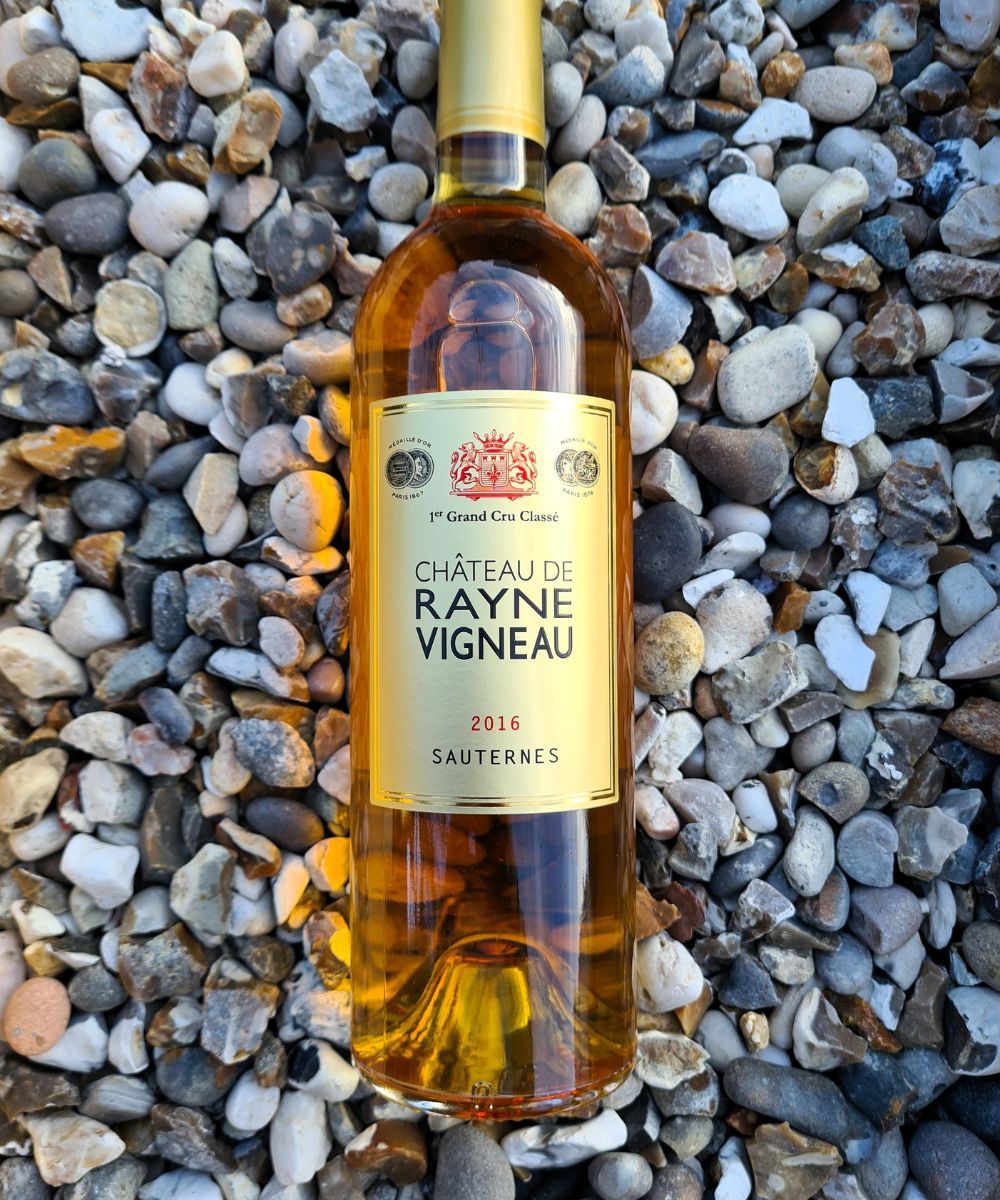
Château de Rayne Vigneau 2016 is composed of 80% Sémillon, 20% Sauvignon Blanc, and a small touch of Muscadelle. The growing season was challenging at first, followed by a superb finish. A mild winter was succeeded by a rather unsettled but sunny spring. The estate’s terroir helped the vines withstand the summer drought, and timely September rains brought the fog needed for botrytis to develop. Harvest took place under ideal conditions with beautifully concentrated noble rot just after the frost.
This vintage opens with aromas of passion fruit and orange blossom. The palate is intense yet fresh with a powerful yet harmonious structure. Vibrant notes of grapefruit, pineapple, and bergamot shine through.
Château de Rayne Vigneau derives its name from it's two early owners: Baron de Rayne and Étienne du Vigneau. At the time of the 1855 Classification, the estate was known simply as Château Vigneau. The property remained in the Rayne family from the 18th century until 1961, when it was sold on. Today, Château de Rayne Vigneau encompasses a substantial 84-hectare vineyard in Sauternes, planted with 74% Sémillon, 24% Sauvignon Blanc, and 2% Muscadelle. The 30 year old vines form one continuous block, which is unusual for an estate of this size. It is also on one of the highest plateaus in the appellation and situated next to the prestigious Chateau d'Yquem.
After pneumatic pressing, the wine is fermented in French oak barrels, 50% of which are new. It then matures in the same proportion of new oak for roughly 18 months. The wine is delicious to drink whilst young but if you can keep your hands off it, it really comes into its own after 12-30 years.
It pairs beautifully with a wide range of dishes, its sweetness and finesse complement seafood—particularly shellfish, lobster, crab, and fresh oysters. Foie gras is a classic match, but it also works well with roasted chicken, veal, or pork, especially when the preparations include spice or a hint of sweetness. Spicy Asian dishes, raw fish such as sushi or sashimi, and a variety of cheeses—both hard and soft—also make excellent companions.